
The Anatomy of Elite Executive Teams: Psychological Safety, Extreme Ownership, and Mutual Trust

In executive search and board succession, the dominant instinct is to seek the undisputed superstar: the visionary technologist, the hyper-aggressive rainmaker, the financial wizard with an impeccable pedigree. Yet, in our extensive analysis of corporate turnaround failures, the root cause is almost never a deficit of individual talent. It is the inability of brilliant individuals to function as a cohesive, trust-based executive unit.
A collection of brilliant egos pursuing divergent personal agendas is not a high-performing team; it is an organizational hazard waiting to detonate. Elite executive teams operate on fundamentally different behavioral operating systems.
Psychological Safety: The Bedrock of Unfiltered Truth
Originally pioneered by Harvard professor Dr. Amy Edmondson and corroborated by Google’s landmark Project Aristotle, psychological safety is frequently misunderstood in corporate culture. It is not polite deference, superficial kindness, or avoiding difficult performance conversations.
In an elite executive leadership setting, psychological safety is the absolute confidence that no team member will be humiliated, sidelined, or politically punished for asking hard questions, admitting a critical mistake, or challenging the CEO’s strategic premise. Where psychological safety is absent, executive meetings become choreographed performances of artificial harmony, while real strategic skepticism is whispered in hallway side-channels.
“When truth cannot travel upwards freely in an organization, bad decisions are codified in silence and disasters arrive without warning.”
The Four Disciplines of High-Performance Leadership Teams
To transform a fractured executive group into a unified, high-performance team, instill these four non-negotiable disciplines:
- 1. Radical Candor with Personal Regard: Challenge assumptions directly, relentlessly, and intellectually—while demonstrating unwavering respect for the individual. Separate the merit of an idea from the personal worth of the person presenting it.
- 2. Disagree and Unconditionally Commit: In the boardroom, vigorous debate is mandatory. But once the final call is determined by the decision owner, all dissent ends. Every executive walks out of that room speaking with unified, unequivocal support for the decision.
- 3. Extreme Ownership Across Boundaries: When an organizational failure occurs, high-performance executives never point fingers across functional divides. They ask first: “What could I have done to anticipate or mitigate this risk earlier?” Blame culture breeds CYA behavior; ownership culture breeds enterprise resilience.
- 4. Relentless Prioritization of the Enterprise: For every senior leader, the Executive Committee must be their First Team. Their secondary team is their departmental division. When department heads prioritize firm-wide health over divisional self-interest, organizational politics evaporate.
The Role of the CEO as Cultural Architect
An executive team will never rise above the emotional maturity and behavioral standards of its chief executive. If a CEO rewards sycophancy and penalizes critical dissent, the leadership team will inevitably become an echo chamber of flattering compliance.
The visionary CEO actively solicits dissent: “We are considering a fifty-million-dollar acquisition. Who can make the most compelling case against it?” By rewarding those who courageously stress-test strategic assumptions, the chief executive inoculates the firm against hubris and blindsided catastrophe.
The Executive Takeaway & Reflection
High-performance leadership is not an accident of chemistry; it is the deliberate, ongoing practice of mutual trust, intellectual honesty, and shared vulnerability. When senior leaders trust one another unconditionally, execution velocity multiplies and institutional resilience becomes insurmountable.
Reflection for the Week Ahead: Does your executive team exhibit genuine radical candor during closed-door sessions, or is there an undercurrent of artificial harmony that obscures critical organizational realities?
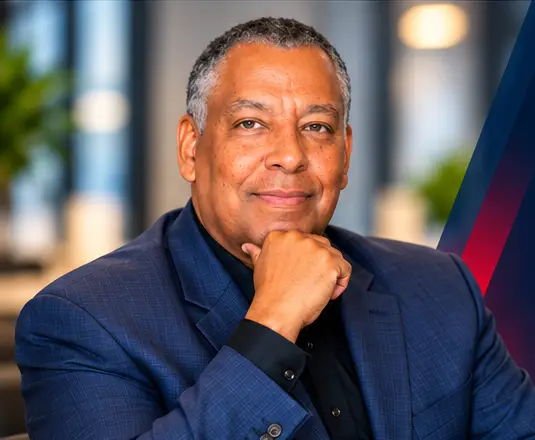
Dr. Victor Reynolds is an IO Psychologist and Career Development Coach. With over 20 years of experience in leadership, human resources, and higher education, he specializes in helping professionals navigate career transitions, strengthen workplace skills, build confidence, and achieve meaningful career advancement.